my recent reads..

Atomic Accidents: A History of Nuclear Meltdowns and Disasters; From the Ozark Mountains to Fukushima
Power Sources and Supplies: World Class Designs
Red Storm Rising
Locked On
Analog Circuits Cookbook
The Teeth Of The Tiger
Sharpe's Gold
Without Remorse
Practical Oscillator Handbook
Red Rabbit
Showing posts with label Read. Show all posts

Tuesday, December 08, 2009

Information, Knowledge, Wisdom ..

Information is not knowledge. Knowledge is not wisdom. Wisdom is not truth. Truth is not beauty. Beauty is not love. Love is not music. Music is the best...

Frank Zappa (Lyrics to the song Packard Goose on the album Joe's Garage: Act III.)

Most consulting firms have a version of the "Data, Information, Knowledge, Wisdom" point of view, but I've never seen any of them credit Zappa;-)

Tuesday, October 13, 2009

Captain's Share

Last year, I wrote about Ishmael Wang's blossoming career on the ships within Nathan Lowell's wonderfully realised future universe of inter-galactic trading.

We last heard of Ishmael when he'd made it to full share and there's been an excrutiatingly long silence as we wait to hear more of his story. But Nathan was on a promise - it was coming!

I must admit I was wondering whether the latest installment would keep up the high standards that Mr Lowell has set for realistic, humanist, hard sci-fi. But now that I've started reading ("listening") to Captain's Share, I know my worries are for naught.

If you think it is remotely possible, I'd say that Nathan Lowell has met and exceeded the standards of story-telling that he set with the earlier books in the saga.

If you are not familiar with the Age of the Solar Clipper, I heartily recommend you start way back at the beginning and work through the series - you won't be disappointed! Not only does Nathan deliver intriguing hard science, but the situations into which he places his characters are model studies of human behaviour (and even management science)... not to mention the few culinary tips I've picked up along the way!

Here's the series (so far) in it's entirety:


All of these stories are wonderfully available for free download in audio format from podiobooks.com: read by the author in an utterly engaging way that only the creator could muster.

When I say "so far" I really mean it: Nathan Lowell has created an alternate universe/future so compelling and detailed that I can imagine (and eagerly await) many more stories drawing from the rich canvas he has created. So many more possibilities than even the Star Trek and Star Wars franchises ... and probably more in the league of the Dune and Foundation sagas ...

Tuesday, June 02, 2009

Java Puzzlers


Apparently, Joshua Block and Neal Gafter started the "Java Puzzlers" idea at Oracle Open World 2001. I wish I was there.

Subsequently, they've turned it into a book
, and a website.

If you program in Java, this is truly a must-read book.

More on my tech blog.

Sunday, May 31, 2009

Zero Day Exploit


I picked out Rob Shein's Zero Day Exploit: Countdown to Darkness (Cyber-Fiction) at the library simply because it stuck out as an obvious "computer book" in the fiction section. I thought it had been mis-shelved and so it caught my eye.

I finished reading it because ... well, it is simply so bad as to have a kind of Ed Wood "B-movie" allure.

It is a pity, because the idea has promise: a fictionalised cyber-security thriller that can almost double as a vulnerability assessment and computer forensics text because of the detail it includes.

Unfortunately, the book would be better titled Zero Day FAIL!

In terms of the computer security technicalities, it is really light weight, making only cursory reference to just a few of the most routine security issues and tools, and describing a methodology that is far from leading practice. The author's main characters are meant to be save-the-world "white hat" geniuses, but they come across as bumbling script-kiddie amateurs. Stuck debugging a program because they mis-spelt "main"? Forgot there might be a firewall in place? Found a vulnerability on the first attempt by sending a stream of É, "because it is a character know to cause buffer overflows". Sheesh!


As a novel, I don't think I've ever read a book so in need of a good editor than this. Just about every aspect needs work or a complete re-write: character development; dialogue; story arc; climax and resolution.

And did I mention the plot? It goes from sublime to the ridiculous, and then just peters away..

Mind you, even well-known authors can fall into the "sublime to the ridiculous" plot trap. Take Eric Van Lustbader for example, writing Robert Ludlum's (TM) The Bourne Sanction. Whereas Ludlum was a true master at pulling together incredibly complex and outlandish plots while never for a moment losing the credulity of his audience, Van Lustbader always seems to miss the mark by a little. And as a reader, once you start questioning the realism of characters' behaviour and the uncanny role of coincidences, then the magic of the story is quickly extinguished and the author has lost you.

I mention The Bourne Sanction for one further reason: like Zero Day Exploit, it features terrorists attempting to distroy the petroleum distribution infrastructure of the US. And the one thing that Rob Shein should feel happy about is that his scenario for how this could be done is way more credible than what Van Lustbader cooked up for The Bourne Sanction (which made me think Van Lustbader was probably script-consulting on Speed 2 at the time)

So was Zero Day Exploit mis-shelved? You bet. They missed the bin by a mile!

Sunday, May 17, 2009

The Software Architect's Professsion


That was a happy age, before the days of architects, before the days of builders. -- Seneca c.4BC-65AD

I hesitated as I reached for The Software Architect's Profession: An Introduction (Software Architecture Series) on the library shelf.

Did I really want to read another treatise on the role of the software architect? Hasn't the term architect been so abused as to now be worthless, even downright counter-productive? In this, I think I am one with Jeff Atwood and Joel Spolsky who discussed the questionable value of the title "Software Architect" on StackOverflow podcast #44.


Nevertheless, my hand followed through. I think I was persuaded by the unimposing nature of this concise little 100-page book.

I was pleasantly surprised; this is a great little book for stimulating some thinking around the role of an architect for the advanced reader. But I worry that it attempts to position itself as "An Introduction". A novice, unprepared to read the text critically, may easily be mislead by the book's definitive statements about what a software architect is and what they do.

Personally, I believe the book is fundamentally flawed in three important aspects:

1. Are we really in Crisis because we lack a Software Architecture Profession?


Firstly, the premise that today's Crisis in Software...
[the] parade of failures and half-failures that has grown over the years as a result of a world without an established profession of software architecture

...is wholly unsupported by any direct evidence. The authors' central argument is of course flawed based on the appearance of a causal relationship where in fact only coincidence has been established beyond doubt. A number of well-known software runaways and failures are mentioned, but I don't know of any where the original case studies attributed the failure primarily to the lack of "an established profession of software architecture". The authors get around this problem by redefining the conclusions and suggesting that all faults may eventually be explained by architecture. It seems to me self-serving and circular.

2. A Flawed Analogy with Building Construction


Second, the authors attempt to reinforce their argument with the proposition that the analogy with building architecture is self-evident. Buildings need architects. Software is like building. Therefore software needs architects. Hmmm. I am reminded of Bernard Rudofsky's book "The Prodigious Builders" which celebrates the history of vernacular architecture. That is, architecture without Architects (unfortunately a stunningly boring book for what ought to be a highly inspirational subject).

I particularly disagree with the authors' contention that software is not developed: it is built (with a sense of finality). The Google-inspired trend towards the perpetual beta is the most visible evidence to the contrary. The authors object to the notion that to develop implies to unfold, uncover, and make known. On the contrary, I find this a most apt description of what we do within the software profession: the youth and continuing innovation within the field does mean that software development and the architecture it requires is more akin to exploration, invention and discovery than to a formalised application of the tried and true.

Strike two.

3. Premature Specialisation


I began to renew my hope for the book as it explored the historical foundations of architecture. Michelangelo can truly lay claim to the title of Architect ("master builder"); his work on St Peter's Basilica epitomizes the unltimate balance between function, beauty, and structure,

Vitruvius is famous for asserting in his book De architectura circa 50BC that a structure must exhibit the three qualities of firmitas, utilitas, venustas — that is, it must be strong or durable, useful, and beautiful. A sense of proportion and harmony is represented in Leonardo Da Vinci's famous illustration of Vitruvian Man.

Such ideas begin to shape the conventional definition of an architect. A master who not only understands structure, utility, and beauty in order to successfully render a design into plans, but has the practical experience to supervise their realisation through construction.

At this point, I think the authors are getting onto the right track. However they stumble at the last post by then inexplicably turning this into an argument for a limited and specialised concept of a "Software Architecture Profession", where the architect only retains responsibility for venustas (design/beauty). Utilitas (function/utility) is the client's problem, and firmitas (form, materials, logistics) is the province of the engineers, scientists and code monkeys.

Time for the Renaissance?


The authors' call for the codification and ossification of a software architecture practice is I think at least 50 years premature.

What an "Architect" needs to be concerned with is still going through successive waves of tumultuous change. Up to the green-screen era, computer system architecture necessarily had a strong hardware component. Come the GUIs and increasing processing power in the 90s, it seemed a singular focus on "software architecture" as a technical discipline was a valid vocation. Now the waves of web-driven innovation and the emergence of the "Rich Internet Application" is again challenging our notions of what architecture entails. And again, the "real world" is encroaching the pure software realm with the rise of increasingly powerful and widely available mobile computing platforms (think iPhone, Android), and the revolution in pervasive automation (think Arduino).

I think the Java Posse were spot on when they discussed the growing need for cross-fertilisation and collaboration between designers and developers on podcast #247 - Design and Engineering. This is a time of divergence, not convergence, in the business of producing software & technology-based systems.

In truth, I question how appropriate both words are in the term "Software Architect":
  • Software - it is perhaps only in the last 10-20 years that it has been possible to construct computer software at the level of complexity that warrants the existence of an architect in the classical sense. And I suspect that in another 10 years it will seem ludicrous to suggest that you can be an Architect of only software ("just a turn-of-the-century fad"). Software is just one component of a "built environment" that encompasses everything from the information infrastructure and systems technology to the psychology, art and design of human interaction; ultimately leading to a desired collaboration between people and machines in the context of real-world objectives.
  • Architect - the common use of the term in the computing field has stripped this word of it's more noble dimensions. No longer is the architect "the person with the vision and skill to make dreams a reality". They are more likely to be the person in the corner who produces nothing but paper, leaves no fingerprints on the pages of history, and is generally ignored by those who are really making things happen.


I don't know what you should call the people who have the experience and ability to lead others to do amazing things with the information technology we have at our disposal.

I'm just pretty sure that "Software Architect" doesn't even come close to being adequate. And building a "profession" around a woefully inadequate definition is a one-way ticket to irrelevance and obscurity.

Sunday, April 12, 2009

Great Innovation for Bathroom Readers

... but I have to know: is there a MAXI version? A pity it seems to have been designed by designers for designers, and not your typical O'Reilly, Apress or Wrox reader;-)image

PicoCool - Elegant Solution for Bathroom Readers

Thursday, April 09, 2009

Hand Drawn Maps - Corsair

Maps have always intrigued me. As a career seafarer, my Dad always had nautical charts around the house, and drawing a map of a saxon village is one of my most distinct primary school memories.

I just stumbled upon the Hand Drawn Maps Association, which will be publishing a collection of hand drawn maps and in anticipation is running a contest for everyone to submit their own maps. In terms of esoteric deliciousness, this is certainly up there with the Cloud Appreciation Society
One of my favourite user submissions so far is David Donachie's RPG coastal map of the country of Tanaloth.


Maps also played a role in a book a recently finished listening to. Tim Severin's Corsair is the story of Hector Lynch who is taken from Ireland by slavers from the Barbary Coast and recounts his adventures to escape captivity. He helps his friend Dan, a slave from the Miskito Coast, turn his tattoo skills to map illustration for their Turkish master and take another step towards freedom.

Corsair is a ripping yarn in the best swashbuckling tradition, however the details that Severin weaves into the tale provide a fascinatingly different perspective on the 17th century, one that is more centered on the North African and Islamic world in both location and outlook.

The audible.com reading is brilliantly delivered by Rupert Farley. Highly recommended.

Sunday, February 08, 2009

Web Form Design


I'm humming and hahing over some form designs at the moment. These days you have so many options, especially when you are getting smart with ajax and scriptaculous tricks.

Having options is always a double-edged sword. Yes, they allow you to do amazing things. But they provide a great recipe for procrastination.

.. just the situation where some thoughtful, concise guidance on leading practices from someone who knows their stuff can be a goldmine.

Thankfully I stumbled upon this great presentation on web form design by Luke Wroblewksi. It's a classic, and now I see he has a book out on the topic which instantly went on my "must read" list.

Sunday, December 07, 2008

The Elements of Style (Illustrated)


I raved about Robert W. Harris' When Good People Write Bad Sentences a few weeks ago. Since then I saw Jeff Atwood's post making the point that great coders bring many of the same skills used in writing to their programming. Jeff cited the Strunk & White classic, The Elements of Style.

So I thought may be it's time to check it out again. I have vague memories of seeing it back at school; I certainly don't remember studying it in any concerted way.

I was unsurprised to discover that the core of the book remains a concise litany of rules of correct English usage. Exactly the kind of un-engaging treatment that I praised When Good People Write Bad Sentences for avoiding.

This part of Elements of Style is remains a great reference guide; you wouldn't really want to just read it like a book. It makes me wonder why we don't have these style guidelines built into our word processor and editing software. Sure, we have spelling and grammar. But as these books prove so well, the correct words in the right order does not alone make for good style.

I did, however, read the illustrated Fourth Edition from 2000. It has two surprises that take it beyond a simple reference book.

First, the quirky "American Modern" illustrations by Maira Kalman are a delight to browse.
His first thought on getting out of bed—if he had any thought at all–was to get back in again.

Second, we have the new chapters added by E.B. White such as "An Approach to Style". These provide much more interesting reading, with a humorous vein in the same class as "When Good People Write Bad Sentences".
Another segment of society that has constructed a language of its own is business.

Its portentious nouns and verbs invest ordinary events with high adventure, executives walk among toner cartidges, caparisoned like knights. We should tolerate them-every person of spirit wants to ride a white horse. The only question is whether business vocabulary is helpful to ordinary prose. [...]

A good many of the special words of business seem designed more to express the user's dreams than to express a precise meaning.

DeGarmo and Lister had a name for that in Peopleware: Management by Hyperbole!


Sunday, November 30, 2008

Oracle Shell Scripting


I remember seeing Jon Emmons' announcement on the Oracle News Aggregator and I've had it in my "wanted" list on bookjetty for ages.

This week I discovered Jon's Oracle Shell Scripting: Linux and UNIX Programming for Oracle (Oracle In-Focus series) at the NLB and have just enjoyed a good read of it.

I wish more DBAs had read this book. In fact it should be mandatory to get an OCP certification!


Let's face it, most Oracle installations are running on a *nix variant, and you can't be a DBA if you are not comfortable at both the SQL*Plus and shell prompt. To be a good and efficient DBA in my book, I want to see evidence of thinking smart, and repetitive task automation. When I see so-called DBAs who are happy to type the same "select .. from v$.." query every day of their working life, I doubt their brain is switched on, and I find it really, really scary to think they have the sys/system passwords!

They say tool usage is a sure sign of advanced intelligence in birds. And the same applies to all of us in IT. The three examples I look for at an Oracle Database installation are:
  • RMAN
  • Grid Control
  • Shell scripts

If none of these are present, then I tend to presume the real DBA has long left the building. Even if you are using third-party alternatives, do you continue to re-evaluate the Oracle capabilities with each new release?

Jon Emmons' book is of course more focused than this. It perfectly fills a niche, with an approachable, practical and comprehensive coverage of shell scripting from a DBA's perspective.

I can see the ideal audience for this book is people who are reasonable familiar with Oracle administration but are new to shell scripting. This book will rapidly teach you all you need to know on the scripting side (and let you skip alot of stuff you can learn later).

In other words, if you are a DBA who has just been assigned to manage a Unix-based system for the first time in your career: get this book. Forget all the (great) general Linux/Unix/shell scripting books for now. Don't even think the Oracle docs will teach you what you need to know. Oracle Shell Scripting: Linux and UNIX Programming for Oracle (Oracle In-Focus series) is what you need!

If you are coming the other way though - an experienced Linux admin being told that from Monday you also need to manage an Oracle database - I'd say this book probably doesn't have much to teach you. There's much more you'd need to learn about Oracle first (after telling your manager he's crazy), and there are really no scripting tricks in the book that you shouldn't already know. The main benefit you get would probably be a few pages in chapter 6 that cover the tricks of using sqlplus in a shell script - all in one place rather than having to tease it out of the Oracle docs (see this related question on stackoverflow).

Hot Pink Flying Saucers and Other Clouds


I stumbled upon Hot Pink Flying Saucers and Other Clouds in Kinokuniya last week. This is a mischievous little "gift book" with some 30 utterly amazing pictures of "clouds that look like things". I had to get it, despite the fact that the 3" x 5" format just doesn't do the subject justice. If anything deserved to be a full size coffee table book, this is it!


The book is produced by the Cloud Appreciation Society, and a magical gallery of images is available on their website. It truly reinvigorates your faith in mankind's inner child that organisations such as this exist.


At The Cloud Appreciation Society we love clouds, we’re not ashamed to say it and we’ve had enough of people moaning about them.

The book has made me look afresh at the skies of Singapore. Living here you don't tend to spend a lot of time looking up. The tropical humidity and general lack of turbulence make saturated blanket cloud cover pretty much the norm. We don't have a big weather section in news broadcasts, and no-one really talks about the weather. At night you are lucky to see the glimmer of a dozen stars (half of which turn out to be 747s coming in to land at Changi).

But, no, since picking up "Hot Pink.." I've been drawn to looking up, and I think my prejudices might be misguided. Not everyday, but I realise now there is a little more interesting action going on than I had assumed. I have my camera on standby now, ready to catch any flying saucers, dogs, ducks, or skateboarders that may make an appearance in our skies.


As an aside, you can join the society for just £4.00 + postage. I was really impressed by the playful and transparent disclosure of how membership fees are applied. Certainly the best I've seen for any club or association, short of ploughing through a really dry P&L statement. Makes me want to sign up, simply as a nod to the good job they have done! NB: as of 22-Jun-2009, the image link on the cloud costs page appears to be broken.


PS: shortly after posting this, I discovered another cloud lover here in Singapore. Anonymous_X has been posting cloud pictures on The Clouds Represent My Heart site since August!

Monday, November 17, 2008

The New Yishun Library

Well, weekdays being weekdays, I didn't manage to get up to Yishun last Thursday in time to enjoy Issak's world-exclusive, personally-guided bloggers' tour of the new Yishun Public Library before the doors were thrown open to the masses on Friday 14th.

I did pop in on Sunday though ... along with the rest of the masses. I mean masses. Just collage a few hundred faces on this picture and you'll get the idea:

The new library stretches across the entire upper level of both the old and new extension of the Northpoint shopping centre (correction: it only seemed that way. Apparently it's just in the new extension). That's a pretty huge space, and aside from some scary cubes in the kids' area, it's pretty much all given over to the collection itself.

Kind of makes sense for a library in a mall: drop in; pick up and move on. Side thought: my cynical mind wonders if the centre management insist the library limit the study space and reading corners. Can't have people inside a mall being distracted from spending money for too long, can we?

Sunday was very busy, and it did show up a few "scalability" problems in the layout. With hindsight, NLB may regret jamming the kids area right up to the entrance, having the customer service queue cut across the walkway, and not making space for a few more checkout machines. There seemed to be a perpetual log jam of people trying to get through the kids area to the adult collection. I guess things will quieten down over the next few weeks, but the floor plan could do with a few tweaks before the library can comfortably handle crowds like this on a routine basis.

I didn't mind too much - this once! After all, there's something very reassuring and downright wholesomely right about a LIBRARY opening attracting so much interest.

mrsburdak did make the blogger preview and posted a great photo tour. Also didn't pass up the opportunity to campaign on a few of the hot issues for library users in Singapore;-)

  • The whole nlb.gov.sg/nl.sg/pl.sg website confusion (and broken: go to pl.sg and click on a menu. Doh!)

  • Messing with the Dewey system by thematically arranging the library. Yep, I also find myself having to check every aisle to find the right section (I dare you to guess which section a book about google maps hacks is in). DBAs call that a "table scan" and hate them like the devil's spawn:-/

OK, so nothing as important as Obama still failing my spell checker, but it's emotional and heady stuff for people who love their libraries.

As I do;-) And now with Yishun I have a fantastic, fully stocked library a door-to-door bus trip away (rather than walk and bus, or walk and train).

PS: thanks Ivan for putting out the call to bloggers about the new library. Hope you continue to get bloggers involved (can't get us to turn up? Make your own: teach the kids to blog at the library). Libraries and blogging are a perfect match in my book.

Sunday, November 09, 2008

When Good People Write Bad Sentences


uush .. I take a deep breath and prepare for the perilous task of blogging about a book that is all about writing well.

I know my writing can be lazy and prone to opacity (to all except me of course), but I do enjoy reading about writing.

However, too many books attempt to just lay down the law - albeit with a garnish of humorous anecdotes - and any 'learning' is short-lived.

Robert W. Harris' When Good People Write Bad Sentences doesn't make this mistake. He knows the problem is not that we don't know the rules. The root cause of our troubles is more fundamental.

(also available from the Singapore National Library)

Bad writing is an addiction; an -ism that is given to misdirect your pen. We are gripped by malescribism.

And just like any other condition, a cure is possible given the right intervention. Which is what this book provides (as you can probably guess, planting tongue firmly in cheek is the first prerequisite to recovery).

In 12 easy steps, we learn to overcome our denial, pride, and insecurity, then find the courage to begin the journey to enlightenment:
  • Accept the fact that bad writing happens.

  • Admit you've willingly made writing mistakes .

  • Believe that Standard English can heal you.

  • Stop writing weak sentences.

  • Stop writing formal sentences.

  • Stop writing overweight sentences.

  • Stop writing unclear sentences.

  • Stop writing careless sentences.

  • Stop writing unpersuasive sentences.

  • Stop writing incongruous sentences.

  • Stop writing unstructured sentences.

  • Stop writing unsightly sentences.


If I can only recommend one book on the craft of writing, this is it. Wherever you use English - school reports, blogs, business proposals, or novels - this book can help you do so more effectively, more efficiently and more enjoyably.

The Recovering Malescribe's Bill of Rights

  • I have the right to embrace Standard English.

  • I have the right to respect my inner child-writer.

  • I have the right to improve my writing skills without aiming for perfection.

  • I have the right to create sentences without being motivated by bad emotions.

  • I have the right to spell better than those around me.

  • I have the right to be grammatically correct.

  • I have the right to punctuate correctly without apology.

  • I have the right to edit my work.

  • I have the right to cooperate with my readers.

  • I have the right to give myself permission to be a healthy writer.

Monday, October 27, 2008

Get Motivated


I hate motivation books; all that sickly rah-rah and exultations that you too can be like Donald Trump if you just repeat to yourself three times: "I am a success. I am a genius. People love me."

Justin Herald's book Get Motivated is refreshingly different, and a thought-provoking read. You may find it in the bookstore in the "Management Self-help Guru" section, but it is probably better classified under sociology.
This is about common sense philosophy for real people. Justin Herald tells it like it is, and sometimes you might not like it (ethics are important? you gotta actually work hard? Jeez!).

Here's a selection of chapter headings
  • Contender or pretender?
  • Victim of victor?
  • Stickability
  • You set your standards
  • The sad passing of common sense
  • Your future is not in your past
  • Don't just do something ... sit there! (my favourite quote)
He touches repeatedly on the idea of setting your own moral and professional standards and then not letting yourself be swayed or pushed into accepting less.
If you don't stand for something, you will fall for anything.

This reminded me of another great quote from Anthony Bourdain on Chef's Story:
My best advice if you are starting out and want to be a success: set yourself high standards and stick to them.
(or words to that effect ...)

A refreshing read, and highly recommended. It may be just what you need to get a fresh perspective and work towards being a more positive life. Or not. I'll leave you with The Bitter Stick Girl's brilliant observation:

Tuesday, October 21, 2008

Thomas of Hookton and 1215, The Year of the Magna Carta


Bernard Cornwell is a master and commander when it comes to bringing alive European history from the last millenia. Where Patrick O'Brian has the sea, Cornwell has the land.

I've read most of the Richard Sharpe novels, but I first encountered the grail quest series as audio books from audible.

I must say that in combination with narration by Seán Barrett, I was absolutely hooked from the out. Together, they bring 14th century Europe to life like I have never heard before. Cornwell with his words that pump life into long dead stories, and Barret with his voice that just seems to call down through the ages.

If only my 2nd form history lessons were like this. But how can history teachers brought up in the 1950's, using text books written by dainty scholars hope to convey a true sense of the times?


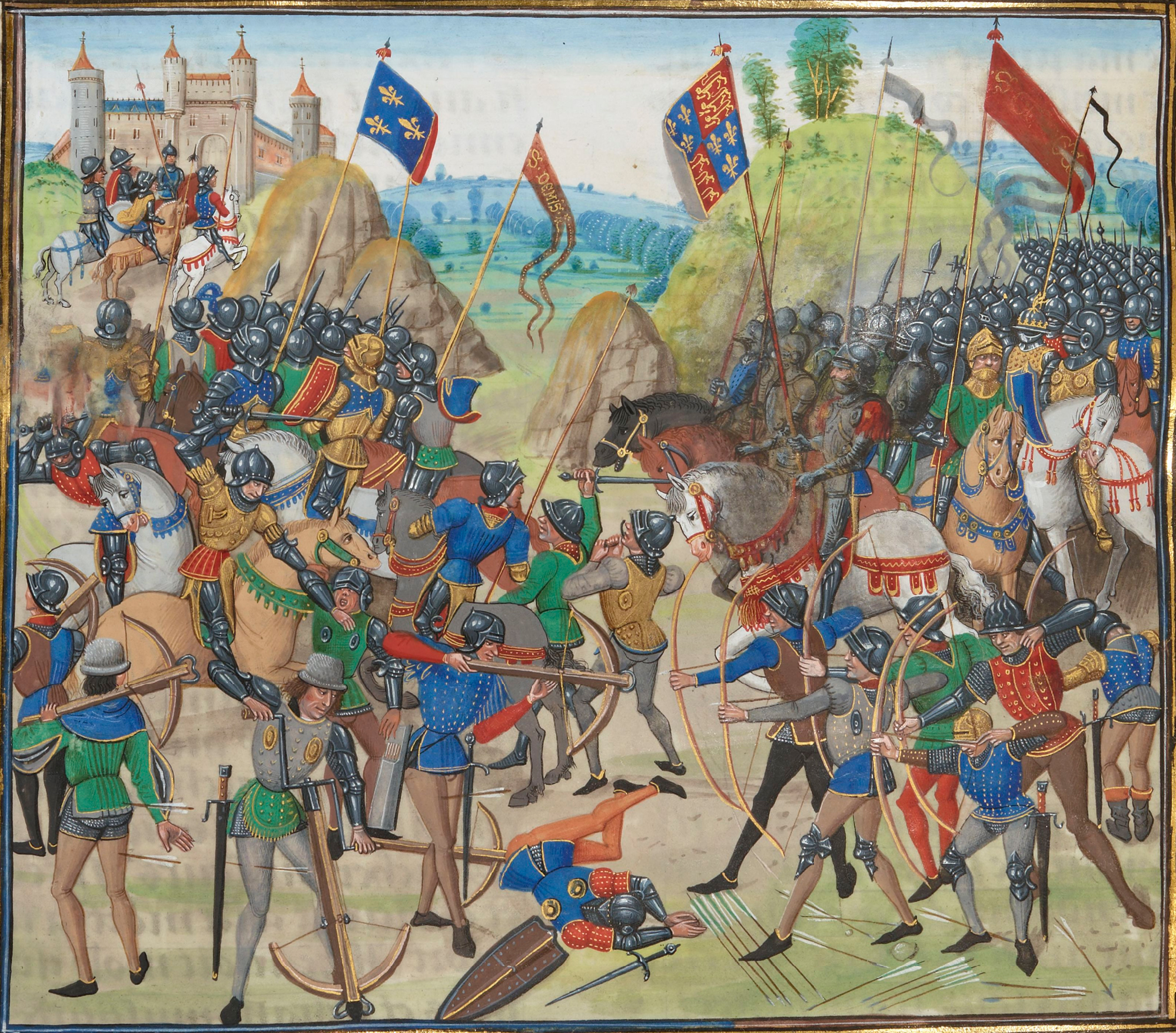
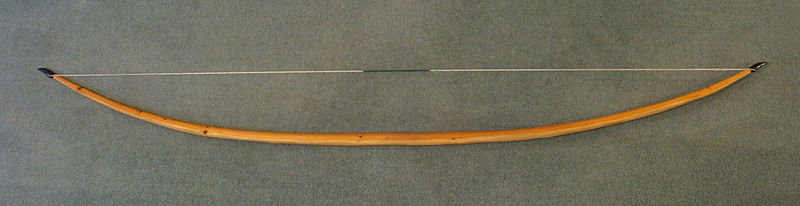
It may look quaint in a tapestry, but battle with sword and bow is particularly brutal. But of course for the men of the time it was just all part of life. As Cornwell tells the tale of Thomas of Hookton, the grim reality of life leaps from the page with Barrett's voice.


Seriously, the best way to "read" the grail quest series is to listen on audible. there are three volumes:


A great companion read is 1215: The Year of Magna Carta. It is a fascinating - and less dramatic - study of England in the 13th century: the years of Prince John, the legend of Robin Hood and of course the Magna Carta.
It was only after reading this, and having been embued in the era thanks to the Grail Quest audible recordings by Seán Barrett, that I finally got a true sense of the complex relationship between France and England after the Norman conquests of Britain.

And then there is the Magna Carta. Probably more significant as a legend and ideal than an actual statement of rights. In its time, it seems to have been seen by some as a scandalous concession to the masses. Even Pope Innocent III condemned the charter as
..not only shameful and demeaning but also illegal and unjust, thereby lessening unduly and impairing his [the king's] royal rights and dignity


Saturday, September 20, 2008

Peopleware


Peopleware: Productive Projects and Teams by Tom DeMarco and Tim Lister is often cited as the classic software development management text; one that rightfully puts the focus on people.

So I had heard about it long before finally getting around to reading it recently.

It is a really good collection of insights, suggestions and anti-patterns that makes a great read, and good food for thought. Especially because it sweats the little things, like office furniture, interview techniques, and the evils of the telephone.

My favourite phrase in the book:
Management by Hysterical Optimism
Haven't we all seen that in action at some time? (unfortunately)

The authors do however take a little liberty in claiming the Hawthorne effect says people perform better when they're trying something new. Which I believe to be true, but isn't exactly what the Hawthorn effect is (people will be more productive when appreciated or when watched).

My report is not all good however. There more I read into the book, the more I felt the authors' advice was biased towards a certain ideal organisation that is I think by no means universally applicable.

In short: workers all strive to be master craftsmen; they provide their own motivation, vision and goals; management is best advised to just provide the creature comforts and get out of their way.

While many may relate to this (personally I do too), as a general theory of management I think it is a crock. In the 60's they would have called this 'flower power'. In the 50's it would have been labeled a 'communist conspiracy'.

No, I think the real world is a little more complex than that. But Peopleware nevertheless delivers a great deal of practical advice.

Seven False Hopes of Software Management


My favourite "list" from the book...
  • There is some new trick you've missed that could send productivity soaring

  • Other managers are getting gains of 100% or more

  • Technology is moving so swiftly that you're being passed by.

  • Changing languages will give you huge gains

  • Because of the backlog, you need to double productivity immediately

  • You automate everything else; isn't it about time to automate your development staff away?

  • Your people will work better if you put them under a lot of pressure

With a preference for the decimal system, I have the temerity to add:
  • Build it and they will come!

  • We just need a SOA architecture!

  • It's going to take too long/cost too much, so can you revise your estimates?

Sunday, September 14, 2008

Think Like a Rocket Scientist


I've been lax in my little posts about books I've read. One of the reasons is that I'm now addicted to bookjetty, which makes it sooo easy to track my reading and think "I'll review/blog it later". The other reason is simply time.

But reading Jim Longuski's The Seven Secrets of How to Think Like a Rocket Scientisthas prompted me into action again.

This is a great book on practical innovation, and generally just getting things done. Although it takes the "Rocket Scientist" as the model (understandable, since Longuski is one), it largely avoids the trap of being elitist and sycophantic. It's just an honest and thoughtful analysis of how rocket scientists work, and presented almost like a pattern language for knowledge workers.

The "seven secrets" are actually seven stages of the creative process, from the initial idea generation through to delivery. Each stage includes half a dozen or more "secrets" (or patterns), so the book is more like "The 50 Secrets of How to .."
  • Dream

  • Judge

  • Ask

  • Check

  • Simplify

  • Optimize

  • Do

The book is also littered with great quotes, has a bibliography that immediately adds many books to your "must read" list. Perhaps the best part is however Longuski's ladder of the "Greatest Sci-Fi Films of the Twentieth Century" gratuitously included in the appendix. Longuski clearly has some "issues" with Shuttle-era NASA, but when these intrude on the text, they just serve to highten the drama!
Any intelligent fool can make things bigger, more complex, and more violent. It takes a touch of genius-and a lot of courage-to move in the opposite direction. -- Albert Einstein

When you find a good move, look for a better one. -- Dr Emanuel Lasker

Do. Or do not. There is no try. -- Jedi Master Yoda

It is often said you can lie with statistics. But-it's even easier to lie without them -- Jim Longuski


PS: I since wrote a reflection on this book called Code like a Rocket Scientist

Tuesday, July 22, 2008

What Customers Really Want


I was involved in a conference last week that left me painfully aware of the missing "voice of the customer".

However it did bring to mind a great book I recently read - What Customers Really Want by Scott McKain.

Not to be confused with the product management text What Customers Want: Using Outcome-Driven Innovation to Create Breakthrough Products and Services by Anthony Ulwick. Completely forgettable in my view, and arguably dangerous in the wrong hands ... particularly when it gets into the dangers of having customers actually involved in the process!

.. well perhaps one good thing about "What the Customer Wants" is that when picking it out at the library I discovered "What the Customer Really Wants" only a shelf away.

I still can't find "What the Customer Really ReallyWants".

Back to "What the Customer Really Wants": in the first few pages I was skeptical, expecting the book to be yet another meaningless management ra-ra piece. Luckily Scott managed to catch my attention before too long and it soon became clear that the book is a gem. Scott McKain talks from the perspective of real experience, and his no-bullshit, folksy plain talk is a welcome relief from the "gurus". Importantly though, it is not just about experience, but also the fact that McKain has distilled and can share valuable insights as a result of that experience. Most are in the "bleeding obvious - but why haven't I thought of that before?" category.

Even the book's organisation is refreshingly to the point. Six main chapters covering six key disconnects..
What Customers REALLY WantWhat Business Supplies
Compelling experienceCustomer service
Personal focusProduct focus
Reciprocal loyaltyEndless prospecting
DifferentiationSameness
CoordinationConfusion
InnovationStatus quo

"Continuous improvement is the enemy of innovation". That got my attention. It's an interesting point of view: Kaizen - constant change - has its role. But innovation is anything but about being constant - its about seeking the dramatic step change. The problem is that most of us cannot cope with being completely focused on incremental change AND at the same time the search for shattering innovation.

The customer is not always right .. but they are always the customer!


Thursday, July 10, 2008

Designing the Obvious, the Moment, Not Thinking and how bad design can make you physically ill


I had a violent adverse reaction to the design vomit that is soshiok.sg
  • massive visual overload

  • poorly aliased graphics used instead of heading text

  • shockingly low-res advertising images (at least DBS have had the initial ads used on launch replaced)

  • "social networking features" that pervert the term, like submit a recipe that is an email link!!

  • Deserves a Daily Sucker award and should probably be renamed to soseow.sg

I could go on, but it just makes me choke. Best medicine: jump to hungrygowhere, who got there first and have done a vastly better job on the web site.

The other essential part of my recovery was to go back and luxuriate in the clarity of thought epitomised by Robert Hoekman's two books on design:

These are two books I think every web designer and, yes, every developer should read. Or have on a bookshelf in easy reach.

Designing the Moment is the one I find myself returning to. It takes a case study/cookbook approach and nuts out many of the issues in contemporary UI design. It's not an encyclopedia or complete reference - you will need to go elsewhere for that. But it does get you in the groove (in a "teach a man to fish.." kind of way). Even if my immediate design challenge is not directly addressed, it is great for getting in the right frame of mind for cutting through all the confusion and honing in on my core issues and purpose. It also contains the single best argument for using "sign in" rather than "login", and some great discussion of form alignment considerations.

Designing the Obvious is the first book, and contains the full discussion of Hoekman's philosophy of the obvious. You could probably get a web design job on the basis of studying this book alone! My only slight qualm is that while it presented a methodology and process for requirements analysis for example, it doesn't really give you a glimpse of other established practices and advice on how to harmonize in a larger and more diverse team situation.

This may sound like sacrilege, but I find these books even better than Steve Krug's Don't Make Me Think. Krug's book is great in its own right, but I feel that Hoekman has taken the art one step further. I'm sure he would agree with Isaac Newton:
If I have seen further it is by standing on the shoulders of giants..

But there's no doubt Don't Make Me Think has some great advice. Some of my favourites:
  • Don't use a mission statement as a Welcome blurb (aargh!!)

  • Usability testing on a budget. Spend one morning a month with a few testers. Debrief immediately over lunch. Act.

  • Mad magazine parody of the NYT tagline:
    All the News That Fits, We Print..


Sunday, June 22, 2008

Uncommon Sense: Out of the box thinking for an in the box world


Peter Cochrane's Uncommon Sense is an interesting collection of opinion pieces taken from his silicom.com blog through to around 2004. While you can read much of the material (and catch later articles) in his blog archives, the book does enhance the content will a liberal scattering of charts and also some additional commentary.

Some of the topics are evergreen, such as the failures of the education system, and the gap that often exists between the actual and the perceived in conventional wisdom. Some are specific to a point in time, like his pre-occupation with the 3G bandwidth auction debacle.

Certainly worth grabbing a copy for a thought provoking read, and ample encouragement to add his blog to my reader for continued entertainment.

Cochrane also has a nice practice of introducing many of his articles with a related quote. One of my favourites is from Douglas Adams:
Technology is the name we give to stuff that doesn't work properly yet.