my recent reads..

Atomic Accidents: A History of Nuclear Meltdowns and Disasters; From the Ozark Mountains to Fukushima
Power Sources and Supplies: World Class Designs
Red Storm Rising
Locked On
Analog Circuits Cookbook
The Teeth Of The Tiger
Sharpe's Gold
Without Remorse
Practical Oscillator Handbook
Red Rabbit

Sunday, November 09, 2008

When Good People Write Bad Sentences


uush .. I take a deep breath and prepare for the perilous task of blogging about a book that is all about writing well.

I know my writing can be lazy and prone to opacity (to all except me of course), but I do enjoy reading about writing.

However, too many books attempt to just lay down the law - albeit with a garnish of humorous anecdotes - and any 'learning' is short-lived.

Robert W. Harris' When Good People Write Bad Sentences doesn't make this mistake. He knows the problem is not that we don't know the rules. The root cause of our troubles is more fundamental.

(also available from the Singapore National Library)

Bad writing is an addiction; an -ism that is given to misdirect your pen. We are gripped by malescribism.

And just like any other condition, a cure is possible given the right intervention. Which is what this book provides (as you can probably guess, planting tongue firmly in cheek is the first prerequisite to recovery).

In 12 easy steps, we learn to overcome our denial, pride, and insecurity, then find the courage to begin the journey to enlightenment:
  • Accept the fact that bad writing happens.

  • Admit you've willingly made writing mistakes .

  • Believe that Standard English can heal you.

  • Stop writing weak sentences.

  • Stop writing formal sentences.

  • Stop writing overweight sentences.

  • Stop writing unclear sentences.

  • Stop writing careless sentences.

  • Stop writing unpersuasive sentences.

  • Stop writing incongruous sentences.

  • Stop writing unstructured sentences.

  • Stop writing unsightly sentences.


If I can only recommend one book on the craft of writing, this is it. Wherever you use English - school reports, blogs, business proposals, or novels - this book can help you do so more effectively, more efficiently and more enjoyably.

The Recovering Malescribe's Bill of Rights

  • I have the right to embrace Standard English.

  • I have the right to respect my inner child-writer.

  • I have the right to improve my writing skills without aiming for perfection.

  • I have the right to create sentences without being motivated by bad emotions.

  • I have the right to spell better than those around me.

  • I have the right to be grammatically correct.

  • I have the right to punctuate correctly without apology.

  • I have the right to edit my work.

  • I have the right to cooperate with my readers.

  • I have the right to give myself permission to be a healthy writer.

Saturday, November 08, 2008

Eleven Fire Crackers


OK, plugging in my iPod now to drown out the friggin jingle bells playing in the background. It's barely November, I'm in Singapore ... so who invited Bing Crosby and a troop of reindeer godammit??

Spinning thru albums at random I crank up the volume on Eleven Fire Crackers, and instantly remember why this was a 2 second buy decision back at some music store in Shinjuku.

I picked it up while working in Tokyo a few years back. I was going crazy over the local bands, and this album by ELLEGARDEN was kind of lost in all the great music at the time.


I think I just listened to it about 3 times today. This is wild, energetic J-Rock at its best, a little pop and heavy on the grunge. I guess what sets them apart from other bands in the genre - like Uplift Spice, another of my favourites - is that many songs are in English. Vocalist 細美武士 Takeshi Hosomi's accent is undefinable and intriguing. Could be Orange Country one moment, pure cockney the next. A little like Hyde in English.

Having just rediscovered ELLEGARDEN, it's sad to now discover I am just a month late - they officially suspend their activities indefinitely in September 2008 and go onto other things.

So no chance to see them live anymore (at least as ELLEGARDEN), only go back and checkout their other albums. I can't imagine anything better than Eleven Fire Crackers. But maybe I have some treasures to discover yet...

Monday, October 27, 2008

Get Motivated


I hate motivation books; all that sickly rah-rah and exultations that you too can be like Donald Trump if you just repeat to yourself three times: "I am a success. I am a genius. People love me."

Justin Herald's book Get Motivated is refreshingly different, and a thought-provoking read. You may find it in the bookstore in the "Management Self-help Guru" section, but it is probably better classified under sociology.
This is about common sense philosophy for real people. Justin Herald tells it like it is, and sometimes you might not like it (ethics are important? you gotta actually work hard? Jeez!).

Here's a selection of chapter headings
  • Contender or pretender?
  • Victim of victor?
  • Stickability
  • You set your standards
  • The sad passing of common sense
  • Your future is not in your past
  • Don't just do something ... sit there! (my favourite quote)
He touches repeatedly on the idea of setting your own moral and professional standards and then not letting yourself be swayed or pushed into accepting less.
If you don't stand for something, you will fall for anything.

This reminded me of another great quote from Anthony Bourdain on Chef's Story:
My best advice if you are starting out and want to be a success: set yourself high standards and stick to them.
(or words to that effect ...)

A refreshing read, and highly recommended. It may be just what you need to get a fresh perspective and work towards being a more positive life. Or not. I'll leave you with The Bitter Stick Girl's brilliant observation:

Tuesday, October 21, 2008

Thomas of Hookton and 1215, The Year of the Magna Carta


Bernard Cornwell is a master and commander when it comes to bringing alive European history from the last millenia. Where Patrick O'Brian has the sea, Cornwell has the land.

I've read most of the Richard Sharpe novels, but I first encountered the grail quest series as audio books from audible.

I must say that in combination with narration by Seán Barrett, I was absolutely hooked from the out. Together, they bring 14th century Europe to life like I have never heard before. Cornwell with his words that pump life into long dead stories, and Barret with his voice that just seems to call down through the ages.

If only my 2nd form history lessons were like this. But how can history teachers brought up in the 1950's, using text books written by dainty scholars hope to convey a true sense of the times?


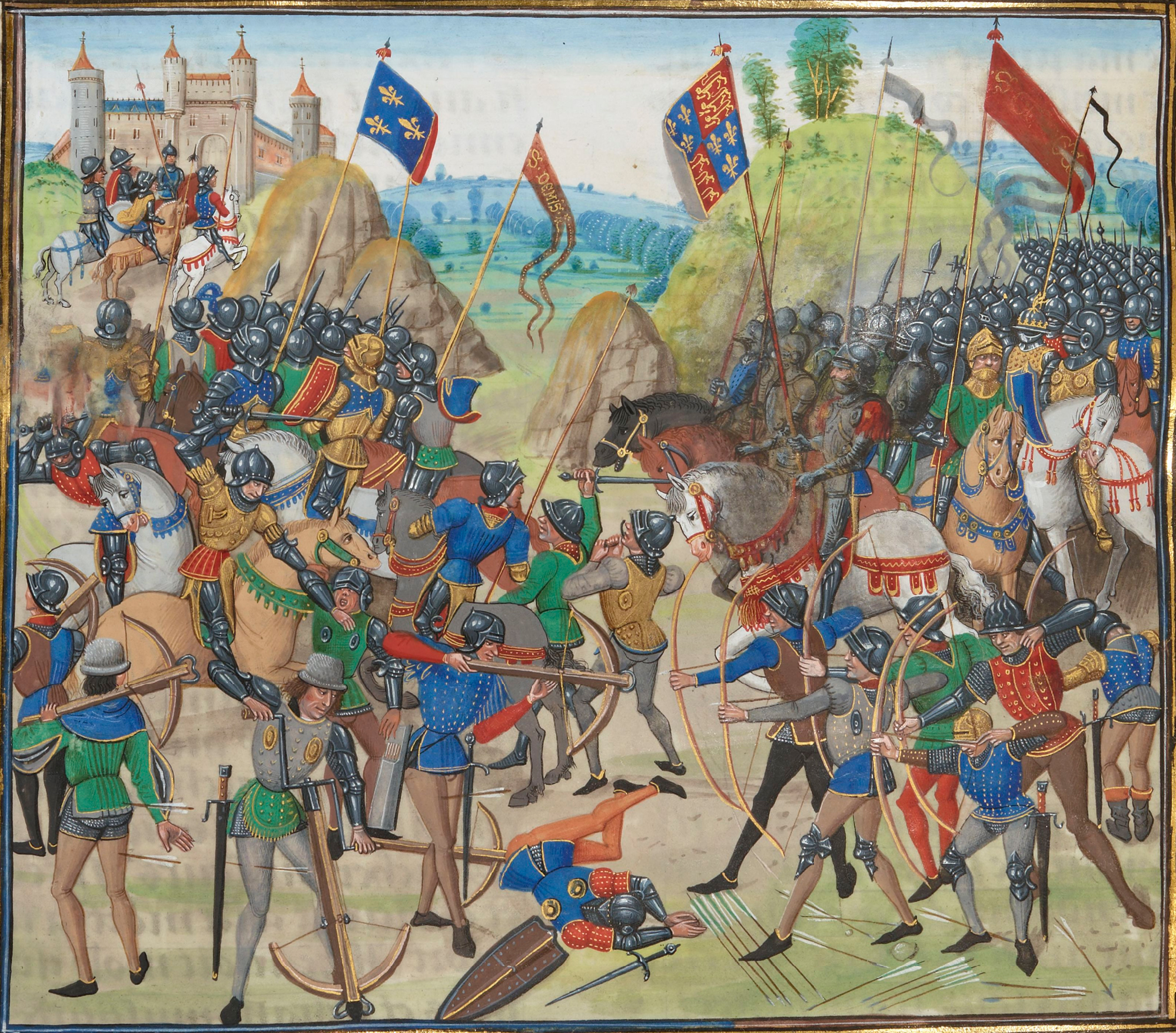
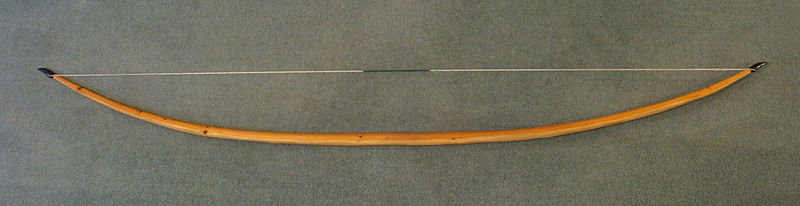
It may look quaint in a tapestry, but battle with sword and bow is particularly brutal. But of course for the men of the time it was just all part of life. As Cornwell tells the tale of Thomas of Hookton, the grim reality of life leaps from the page with Barrett's voice.


Seriously, the best way to "read" the grail quest series is to listen on audible. there are three volumes:


A great companion read is 1215: The Year of Magna Carta. It is a fascinating - and less dramatic - study of England in the 13th century: the years of Prince John, the legend of Robin Hood and of course the Magna Carta.
It was only after reading this, and having been embued in the era thanks to the Grail Quest audible recordings by Seán Barrett, that I finally got a true sense of the complex relationship between France and England after the Norman conquests of Britain.

And then there is the Magna Carta. Probably more significant as a legend and ideal than an actual statement of rights. In its time, it seems to have been seen by some as a scandalous concession to the masses. Even Pope Innocent III condemned the charter as
..not only shameful and demeaning but also illegal and unjust, thereby lessening unduly and impairing his [the king's] royal rights and dignity


Tuesday, October 07, 2008

Premature Exultation

No better lesson on counting chickens...

Saturday, September 20, 2008

Peopleware


Peopleware: Productive Projects and Teams by Tom DeMarco and Tim Lister is often cited as the classic software development management text; one that rightfully puts the focus on people.

So I had heard about it long before finally getting around to reading it recently.

It is a really good collection of insights, suggestions and anti-patterns that makes a great read, and good food for thought. Especially because it sweats the little things, like office furniture, interview techniques, and the evils of the telephone.

My favourite phrase in the book:
Management by Hysterical Optimism
Haven't we all seen that in action at some time? (unfortunately)

The authors do however take a little liberty in claiming the Hawthorne effect says people perform better when they're trying something new. Which I believe to be true, but isn't exactly what the Hawthorn effect is (people will be more productive when appreciated or when watched).

My report is not all good however. There more I read into the book, the more I felt the authors' advice was biased towards a certain ideal organisation that is I think by no means universally applicable.

In short: workers all strive to be master craftsmen; they provide their own motivation, vision and goals; management is best advised to just provide the creature comforts and get out of their way.

While many may relate to this (personally I do too), as a general theory of management I think it is a crock. In the 60's they would have called this 'flower power'. In the 50's it would have been labeled a 'communist conspiracy'.

No, I think the real world is a little more complex than that. But Peopleware nevertheless delivers a great deal of practical advice.

Seven False Hopes of Software Management


My favourite "list" from the book...
  • There is some new trick you've missed that could send productivity soaring

  • Other managers are getting gains of 100% or more

  • Technology is moving so swiftly that you're being passed by.

  • Changing languages will give you huge gains

  • Because of the backlog, you need to double productivity immediately

  • You automate everything else; isn't it about time to automate your development staff away?

  • Your people will work better if you put them under a lot of pressure

With a preference for the decimal system, I have the temerity to add:
  • Build it and they will come!

  • We just need a SOA architecture!

  • It's going to take too long/cost too much, so can you revise your estimates?

Sunday, September 14, 2008

Think Like a Rocket Scientist


I've been lax in my little posts about books I've read. One of the reasons is that I'm now addicted to bookjetty, which makes it sooo easy to track my reading and think "I'll review/blog it later". The other reason is simply time.

But reading Jim Longuski's The Seven Secrets of How to Think Like a Rocket Scientisthas prompted me into action again.

This is a great book on practical innovation, and generally just getting things done. Although it takes the "Rocket Scientist" as the model (understandable, since Longuski is one), it largely avoids the trap of being elitist and sycophantic. It's just an honest and thoughtful analysis of how rocket scientists work, and presented almost like a pattern language for knowledge workers.

The "seven secrets" are actually seven stages of the creative process, from the initial idea generation through to delivery. Each stage includes half a dozen or more "secrets" (or patterns), so the book is more like "The 50 Secrets of How to .."
  • Dream

  • Judge

  • Ask

  • Check

  • Simplify

  • Optimize

  • Do

The book is also littered with great quotes, has a bibliography that immediately adds many books to your "must read" list. Perhaps the best part is however Longuski's ladder of the "Greatest Sci-Fi Films of the Twentieth Century" gratuitously included in the appendix. Longuski clearly has some "issues" with Shuttle-era NASA, but when these intrude on the text, they just serve to highten the drama!
Any intelligent fool can make things bigger, more complex, and more violent. It takes a touch of genius-and a lot of courage-to move in the opposite direction. -- Albert Einstein

When you find a good move, look for a better one. -- Dr Emanuel Lasker

Do. Or do not. There is no try. -- Jedi Master Yoda

It is often said you can lie with statistics. But-it's even easier to lie without them -- Jim Longuski


PS: I since wrote a reflection on this book called Code like a Rocket Scientist

Sunday, August 03, 2008

Show the Whale!

Adam Keys and Geoffrey Grosenbach introduced the term for 2008 on the rails podcast: show the whale.
I think it's perfect, and in my lexicon already!
==> No, this is not the official fail whale logo! The real one was done by Yiying Lu, a young designer from China/Sydney, who now is world famous thanks to twitter's stability problems.